
Have you ever wondered what “May Allah Bless You” truly means in Arabic? This simple phrase carries deep meaning and heartfelt blessings.
In this article, we reveal the true meaning behind this beautiful phrase. Learn how to use it and share it with others in the right way.
Understanding the Meaning Behind “May Allah Bless You in Arabic”
- This phrase asks God to grant someone happiness and grace.
- It reflects care, respect, and good wishes for another person.
- The phrase is rooted in Islamic faith and daily speech.
- It is often said during greetings or after a kind act.
- Muslims use it to express love and gratitude.
- The words carry both a religious and emotional meaning.
- It shows a wish for someone’s success and well-being.
- Saying it connects people through faith and kindness.
The Power of Blessings in Arabic and Islamic Culture
- Blessings hold a special place in Arabic culture.
- Muslims believe words carry spiritual power and meaning.
- A blessing can uplift someone’s mood instantly.
- Islamic culture encourages sharing kind words often.
- Blessings are seen as small acts of worship.
- They strengthen bonds between family and friends.
- Speaking blessings is a habit taught from childhood.
- These words reflect deep respect for others.
May allah bless you in arabic calligraphy
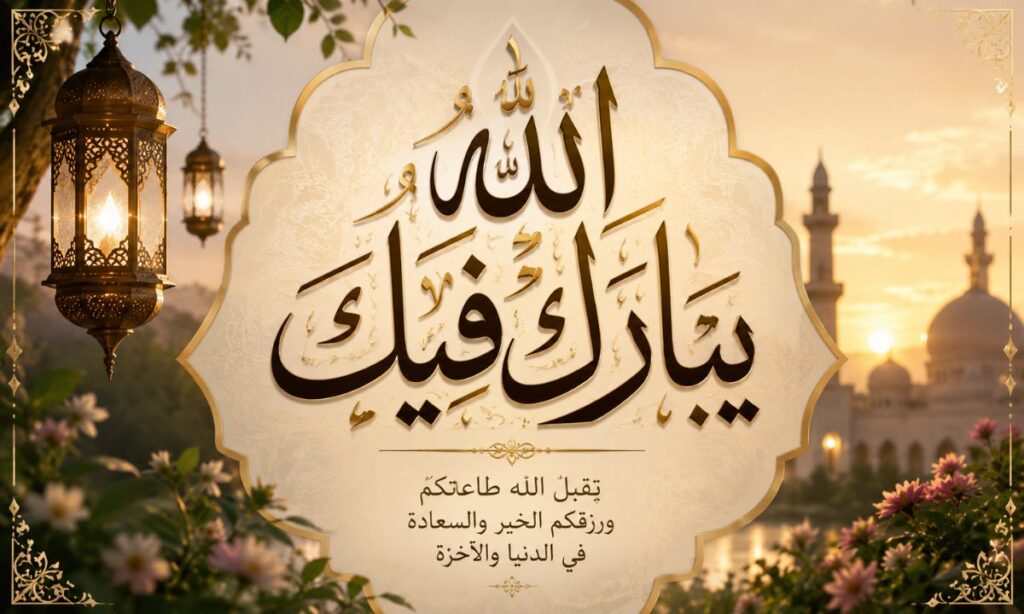
- Calligraphy turns this blessing into a piece of art.
- Arabic calligraphy adds beauty to spiritual words.
- Many frame this phrase as a home decoration.
- It is a popular gift for weddings and special days.
- Calligraphy versions are shared often on social media.
- The flowing script reflects the phrase’s deep meaning.
- People use it in cards, gifts, and wall art.
- It makes a thoughtful and meaningful present.
What Does “May Allah Bless You” Mean in Islam
- In Islam, it means asking God for mercy and favor.
- It reflects a sincere wish for someone’s good life.
- Muslims say it to show love and respect.
- The phrase is used after good news or achievements.
- It reminds believers to seek blessings from God.
- Saying it is considered a small good deed.
- It strengthens the bond between the speaker and listener.
- The phrase reflects humility and gratitude to God.
Common Arabic Phrases for “God Bless You” and Their Meanings
- “Barak Allahu Feek” means may God bless you.
- “Allah Yubarik Feek” is used in daily conversations.
- “Jazak Allahu Khairan” means may God reward you well.
- These phrases are used after kind acts or good news.
- Each phrase reflects gratitude and good wishes.
- They are common in both formal and casual talk.
- Muslims use these phrases across many cultures.
- Each carries the same spirit of blessing and thanks.
How to Say “God Bless You” in Arabic the Right Way
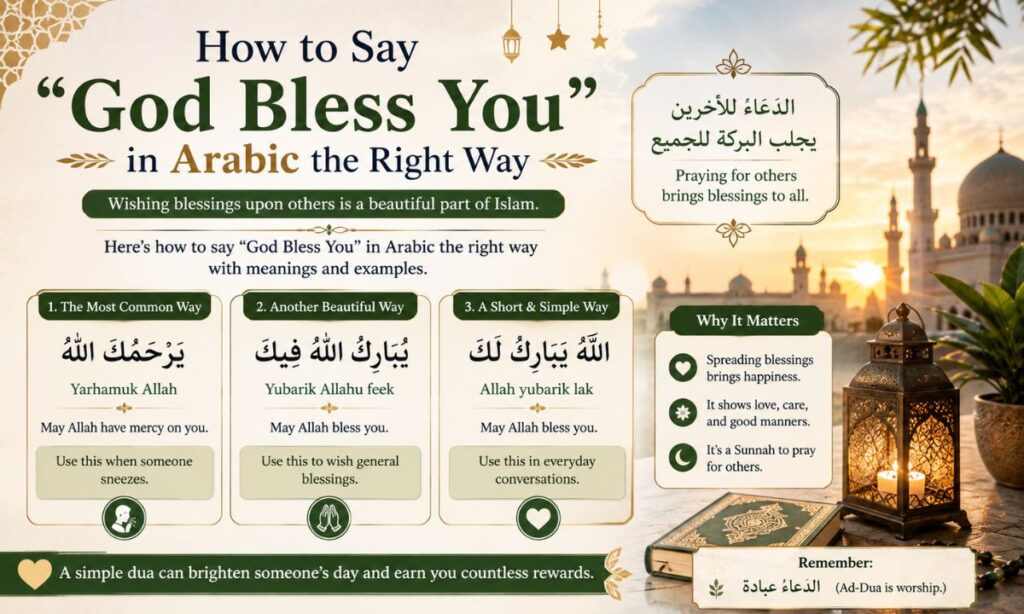
- Use “Barak Allahu Feek” for a male speaker.
- Use “Barak Allahu Feeki” when speaking to a female.
- Pronounce each word slowly and clearly at first.
- Practice helps you say the phrase with confidence.
- Use it after hearing good news or thanks.
- It’s polite to respond with a similar blessing.
- Saying it sincerely matters more than perfect pronunciation.
- Over time, it becomes natural in daily speech.
May allah bless you in arabic female
- For a woman, say “Barak Allahu Feeki.”
- The extra “ki” sound shows it’s meant for a female.
- This small change reflects Arabic grammar rules.
- It is commonly used among women and girls.
- The meaning stays the same, only the form changes.
- Many greeting cards include this version for women.
- It’s often used between mothers, sisters, and friends.
- Learning this version helps you speak more accurately.
Expressing Gratitude and Well-Wishes in Arabic
- Arabic offers many warm ways to say thank you.
- Gratitude is often paired with blessings in speech.
- Saying “Shukran” means thank you in Arabic.
- Adding a blessing makes gratitude feel more heartfelt.
- Well-wishes are common after celebrations or good news.
- These phrases build stronger personal connections.
- Simple words can carry deep emotional meaning.
- Arabic speakers value kindness expressed through language.
The Deeper Meaning of “God Be With You” and “Bless You” in Arabic
- “God be with you” offers comfort and protection.
- It is often said during hard times or travel.
- “Bless you” focuses more on happiness and success.
- Both phrases show care for someone’s well-being.
- They are used to comfort worried or nervous people.
- These phrases carry emotional and spiritual support.
- Saying them shows you care about someone deeply.
- Both are common in daily Islamic conversations.
When and How to Use “May Allah Bless You” in Conversations
- Use it after someone shares good news.
- Say it when thanking someone for their kindness.
- It fits well during celebrations like weddings or births.
- Use it as a warm goodbye or greeting.
- It can follow a compliment or kind gesture.
- Say it sincerely, not just out of habit.
- It’s appropriate in both casual and formal settings.
- Using it often helps build trust and warmth.
The Spiritual Rewards of Blessing Others in Islam
- Blessing others is seen as a good deed in Islam.
- It brings spiritual reward to the person who says it.
- Kind words are believed to please God.
- Blessing others reflects a humble and grateful heart.
- It encourages positive energy between people.
- Muslims believe blessings return to the giver too.
- Small words can carry big spiritual value.
- Regularly blessing others strengthens personal faith.
May allah bless you in arabic translation
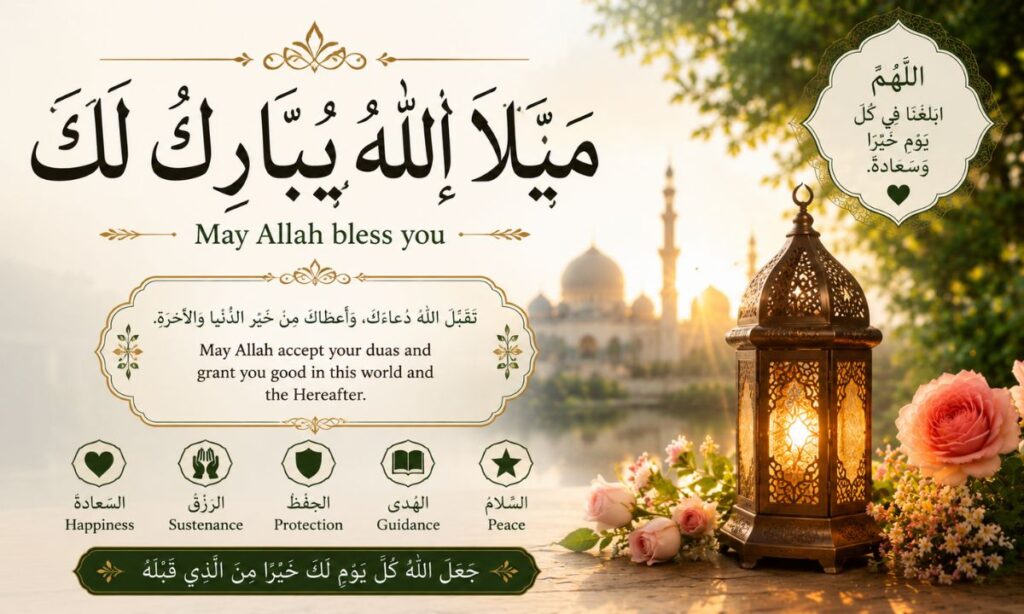
- The direct translation is “Barak Allahu Feek.”
- It literally means “may God place blessings in you.”
- The phrase carries both a spiritual and emotional meaning.
- Translations may vary slightly depending on context.
- The core meaning always stays about blessings and grace.
- It’s more than words, it’s a heartfelt prayer.
- Understanding the translation deepens its meaning.
- Many find comfort in learning the true translation.
How Arabic Blessings Strengthen Faith and Community Bonds
- Blessings remind people of their shared faith.
- They create a sense of unity within communities.
- Saying blessings often builds trust among people.
- These words are passed down through generations.
- They keep cultural and religious traditions alive.
- Blessings help people feel connected and supported.
- Sharing kind words strengthens community relationships.
- Faith grows stronger when blessings are shared often.
Also read these blessings
Frequently Asked Questions?
What does “May Allah Bless You” mean in Arabic?
It means asking God to grant someone happiness and grace. It is a heartfelt wish for another person’s well-being.
How do you say “May Allah Bless You” in Arabic?
You say “Barak Allahu Feek” for a male. For a female, you say “Barak Allahu Feeki.”
When should I use this phrase?
You can use it after good news or a kind act. It also works well as a warm greeting or goodbye.
Is this phrase only used by Muslims?
It is rooted in Islamic culture but can be shared with anyone. Many people use it to express genuine goodwill.
What is the difference between the male and female form?
The female form adds “ki” at the end of the phrase. This follows Arabic grammar rules for addressing women.
Why is blessing others important in Islam?
Blessing others is seen as a good deed and act of kindness. It brings spiritual reward to the person who says it.
Can I use this phrase in daily conversations?
Yes, it fits both casual and formal settings. Saying it often helps build warmth and trust with others.